

Garden of Eden
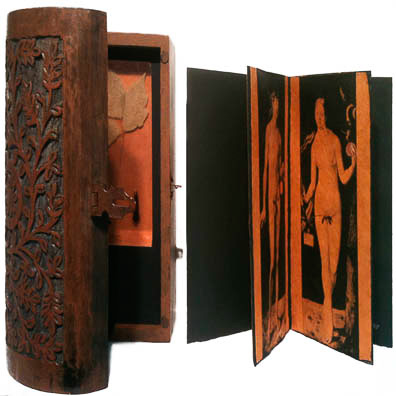
11” x 5”, opening to 33 inches, 12 pages. Box 12-1/8 x 6 x 6 inches. Unique book. The book contains images of Durer’s Adam and Eve, Simone Martine’s Angel Michael and a serpent from a natural history source. The images and the text, Robert Frost’s poem “Nothing Gold Can Stay,” are pigment printed in black on orange Mi Tiens paper, collaged onto Arches cover black. The poem is printed with Bickham Script Pro and the title uses the typeface James II WF. The apples, held by the figure in each of the three images, are of copper leaf. Housed in a wood box with vines carved into the domed lid, the book sits on top of a specimen of poison ivy encased in a block of Acrylic. A black grosgrain ribbon lifts the book. The verso of the concertina is a continuous image of a bucolic landscape from a sheet of decorative black and orange Mi Tiens paper. Priscilla Juvelis says: “An arresting juxtaposition of text and image and object, this Garden of Eden is one that can endure. A most provocative presentation of Robert Frost’s poem, “Nothing Gold Can Stay” relating the natural world to moral questions.”
SerpentStone
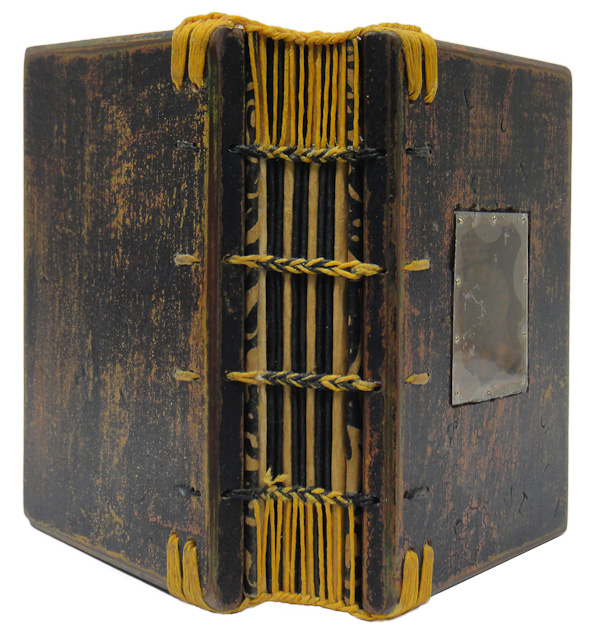
5 x 3.5 inches, 128 pages handmade paper, 12 pages mica. Ethopian Coptic binding with wood covers, a fossilized ammonite embeded behind mica and a leather clasp. Unique book. Housed in a wood and plexiglas box. In medieval Europe, fossilised ammonites were thought to be petrified snakes, and were called “snakestones” or, more commonly in medieval England, “serpentstones”. They were taken to be evidence for the actions of saints such as Saint Hilda and Saint Patrick. Traders would occasionally carve the face of a snake into the empty, wide end of the ammonite fossil and sell them to the public. Ammonites from the Gandaki river in Nepal are known as saligrams, and are believed by Hindus to be a concrete manifestation of God or Vishnu.
Happily Ever After
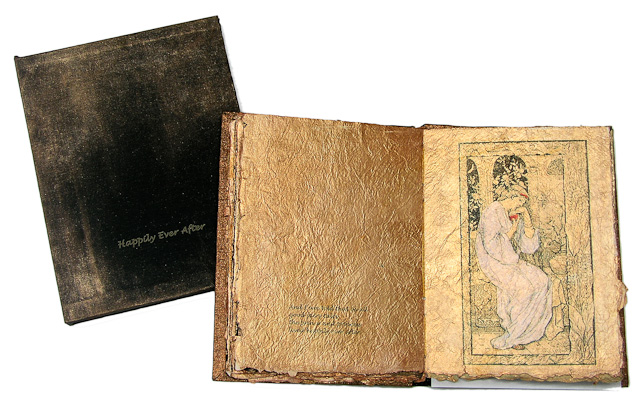
8 x 6 inches; 21pp. plus laid in colophon on transluscent vegetable vellum paper digitally printed in brown ink. Unique artist’s book on LamaLi paper toned with metallic pigment Hand sewn three-piece case binding with black leather spine and bookcloth painted in copper metallic tones to match the pages. The title is engraved on the front panel below a small (1-3/4 x 1 inch) metal dragon. The book is housed in a matching slip case of black cloth over boards toned bronze at edge,s with title engraved in dull silver on the front. The images are adapted from SLAV FAIRY TALES translated and illustrated by Emily J. Harding. The text, written by the artist, is pigment printed with the images, using Lucinda Handwriting and Lucinda Grande fonts. The colophon / artist’s statement starts, “This romantic fairy tale is set in never-never land with archetypal characters and motifs” and closes with “A symbolic psychological mirror, mythic childhood stories like this may well shape our adult lives.” A sample of the text is “I am made to work hard / at menial tasks – / spinning flax into gold, / cleaning the scullery or / taking care of geese. / Or I have been placed under a spell. “Priscilla Juvelis says, “We all know these stories; not all of us realize their effects on our lives. The modern-looking metallic pages on black ground combine with the “retro-looking” images to bring a strangely contemporary sensibility to our oldest archetypes.”
Book + Art: Handcrafting Artists
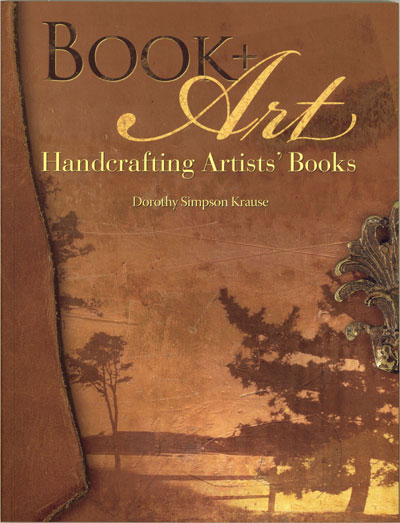
Book + Art: Handcrafting Artists’ Books focuses on content and suggests simple and elegant ways of presenting it in book form. It covers:• An introduction to bookmaking tools and common materials• The basics of selecting paper and other substrates• Traditional and digital ways to incorporate images and words• How to utilize blank and altered books• Simple […]
1997 Ennobling the Ordinary

flowerchild kneeling at the gate helmet of flowers madonna of san miguel birth tree of life lady of the flowers marketplace child of the universe cinderella against the wall looking back Ennobling the Ordinary: Women of the World Krause has built up her surfaces to new levels of texture and density. While this aesthetic choice […]
Lenticular prints
Lenticular prints 12″ x 12″, printed on clear film, laminated to 40lpi lenticular lens and placed over reflective or other surfaces. A lenticular print is made by placing an “interlaced” image, (cut and reassembled in vertical strips), behind a sheet of plastic with a series of parallel lens or lenticules embossed into one surface. When […]
Monoprint/ emulsion transfers
Monoprint/ emulsion transfers 30″ x 22″ image on 36″ x 28″ Stone Paper using Digital Art Studios Seminars transfer film and SuperSauce. Edition of 6. Select the following links to see lenticular images and monoprints in this series.
Monoprints
Monoprints 24″ x 24″ transfers to a variety of substrates including fresco, brushed aluminum, non-woven fabric and silver leaf. Select the following llinks to see lenticular images and emulsion transfers in this series.
Missing
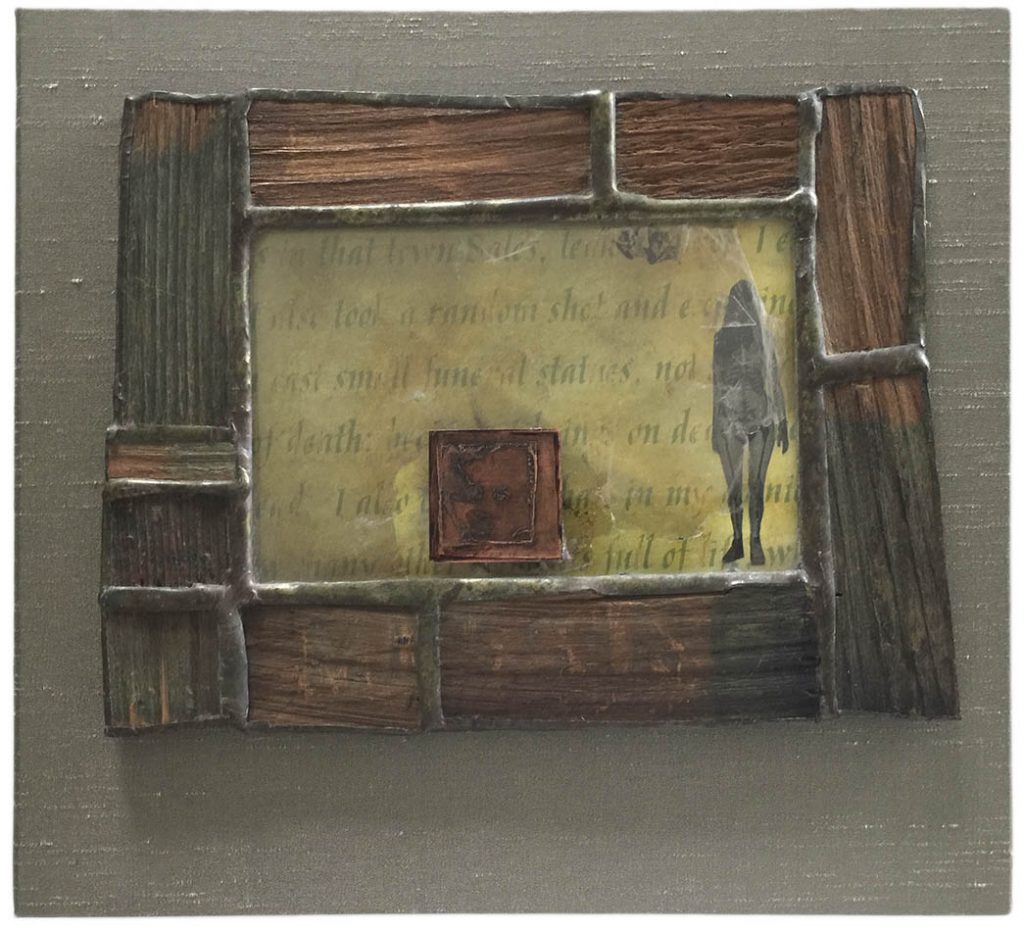
It is estimated that at least 8 million children worldwide go missing each year, including 800,000 in the U.S.; 230,000 in the U.K.; 100,000 in Germany; 50,000 in Canada; 45,000 in Mexico; 40,000 in Brazil and 39,000 in France. In most of the developing world, including Africa, Asia, and Latin America, there is no count for missing children. A multilingual database that features photographs and information about missing children from around the world was established in 1998 by the International Centre for Missing and Exploited Children (ICMEC). Twenty two countries participate in this Global Missing Children’s Network (GMCN). Eighteen countries have child abduction alerts: Australia, Belgium, Canada, Czech Republic, France, Greece, Guatemala, Italy, Mexico, the Netherlands, Malaysia, Poland, Portugal, Romania, South Korea, Switzerland, the U.K. and the US. All 50 of the United States have AMBER (America’s Missing: Broadcast Emergency Response) Alert plans in place and across Europe a single missing child telephone number, 116 000, is being implemented. In most African, Asian and Latin American countries, there are no specific laws regarding missing children, no established protocol for reporting, and no central missing child registries. In the US, half of the missing children cases reported each year are runaways. One quarter of missing children cases are abductions committed by family members, often as a result of custody disputes. Of children abducted by parents, 53% of the time fathers are responsible while 25% of the time mothers are responsible. The remainder of these children are abducted by grandparents, aunts, uncles, and other family members. Approximately 46% are returned within a week and 21% within a month. In the US only one-hundredth of 1% of all missing children, or approximately 100, are kidnappings by strangers and 90% of the kidnappers are men. In 80 percent of abductions by strangers, the first contact between the child and the abductor occurs within a quarter mile of the child’s home. Most potential abductors grab their victims on the street or try to lure them into their vehicles. Most of these 100 victims are between 12 and 17, 80% are white and 74% are girls. In more than half the cases the victims are sexually assaulted and 20% are not found alive. Acting quickly is critical. Seventy-four percent of abducted children who are ultimately murdered are dead within three hours of the abduction. The National Center for Missing & Exploited Children (NCMEC) serves as the US clearinghouse and resource center for information about missing and exploited children. Contact them at MissingKids.org. This book has 14 pages, 8.75” x 9.5” x 1.25”, each with a 1.75” etched copper square image of a child. The post bound cover of moss green silk has a collaged image within a lead wrapped wood frame.
Ladies of the Night
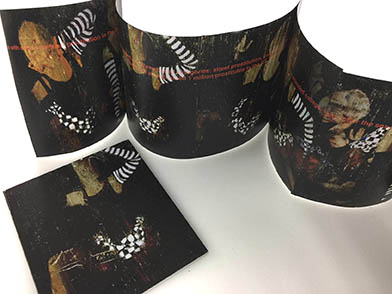
Ladies of the Night was designed to fit into a 10” x 12” x ½” aluminum box. It was printed at Roland DGA, the pages on their VersaUV LEC-330 and the aluminum box on their LEF-300, a flatbed printer with white and gloss inks. Printed 57” long it folded as an accordion with six 9 ½” x 11 ½” pages inside and 6 pages outside. Ladies of the Night used photographs of twin performance artists, Abigail and Emily Taylor. The text on the back of Ladies reads: Prostitution is the practice or occupation of engaging in sexual activity for payment. As with other countries, prostitution in the US can be divided into three broad categories: street prostitution, brothel prostitution, and escort prostitution. There are an estimated 1 million prostitutes in the US. Most have a high school diploma and many have attended college. Many enter the sex industry to provide for their families when they have exhausted all other options. Nevada is the only state in the U.S. to allow legal prostitution – in the form of regulated brothels, although it exists in most parts of the country. Street prostitutes are attacked physically on average of once per month — 68% reported having been raped and 82% reported having been physically assaulted. Their death rate is 6 times that of the general population and more than double that of fishing workers, the highest fatality profession. Between 70,000 and 80,000 people are arrested each year for prostitution costing taxpayers approximately $200 million. Of arrests related to prostitution 10% are the customers, 20% are pimps or male prostitutes and 70% are female prostitutes. Prostitution in the US is estimated to generate $14 billion a year, more than drugs and guns combined. Approximately 10% of customers pay with credit cards. Craigslist no longer lists “adult services” however Backpage.com makes an average of $22 million a year from adult classifieds.